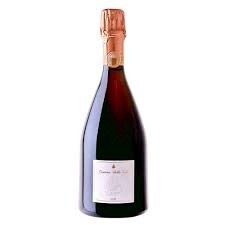
2020 Cantina della Volta Rosé Lambrusco, Emilia Romagna, Italy
$32.99
In stock: 1 available
1
Product details
Pale onion-skin pink with a fine, persistent bead — nothing like the opaque purple most people picture when they hear "Lambrusco." The nose opens on wild strawberry, raspberry, and pomegranate, then a dried rose-petal note and a citrus-peel lift, with a faint bready edge from the extended lees aging underneath. Bone-dry on the palate, light-bodied, driven by the searing acidity that defines Sorbara, with a creamy mousse from three-and-a-half years on the lees and the barest tannic grip off the skins. The finish is saline and citric, long, and leaves the mouth watering.
Christian Bellei trained in Champagne and brought the discipline home: fourth-generation Modenese producer building on his father's push to make bottle-fermented Lambrusco a serious wine. He works exclusively with Lambrusco di Sorbara — the lightest, highest-acid grape in the family, and the hardest to grow because it doesn't reliably self-pollinate — precisely because that acid backbone is what lets it stand up to the traditional method and 42 months on the lees. This rosé pours by the glass at Osteria Francescana, three-Michelin-star, a few miles from the cellar. That placement does more selling than any tasting note will.
2020 Cantina della Volta Rosé Lambrusco, Emilia Romagna, Italy
Powered by Lightspeed
Display prices in:USD